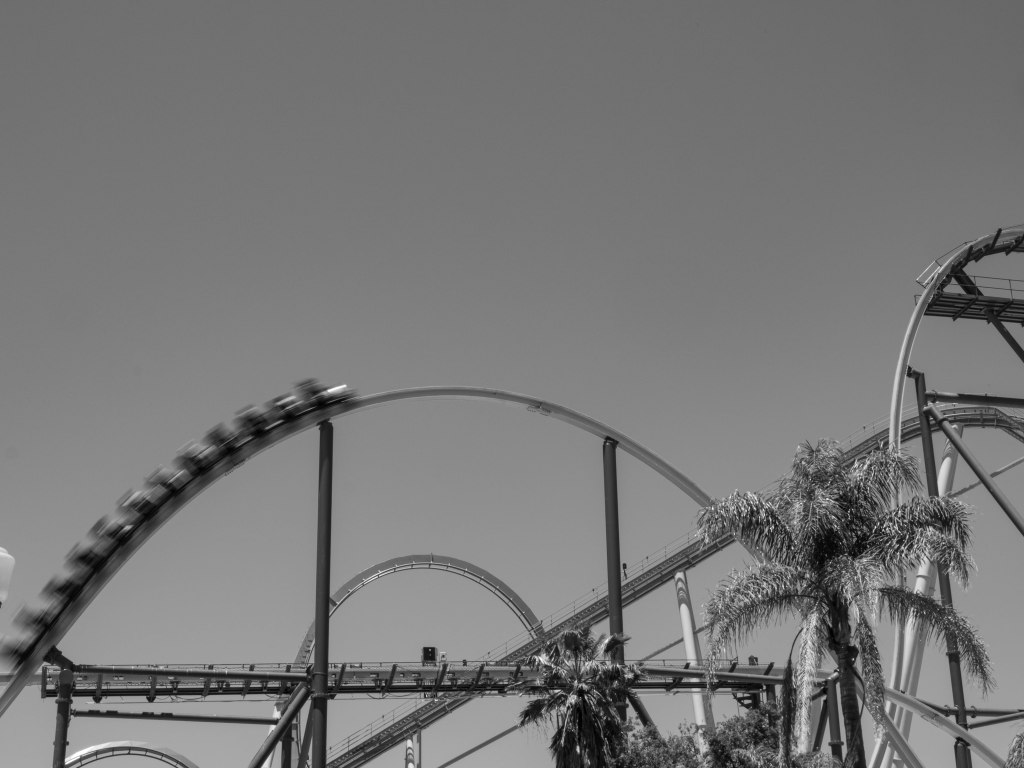
OM-1, 14-150mm

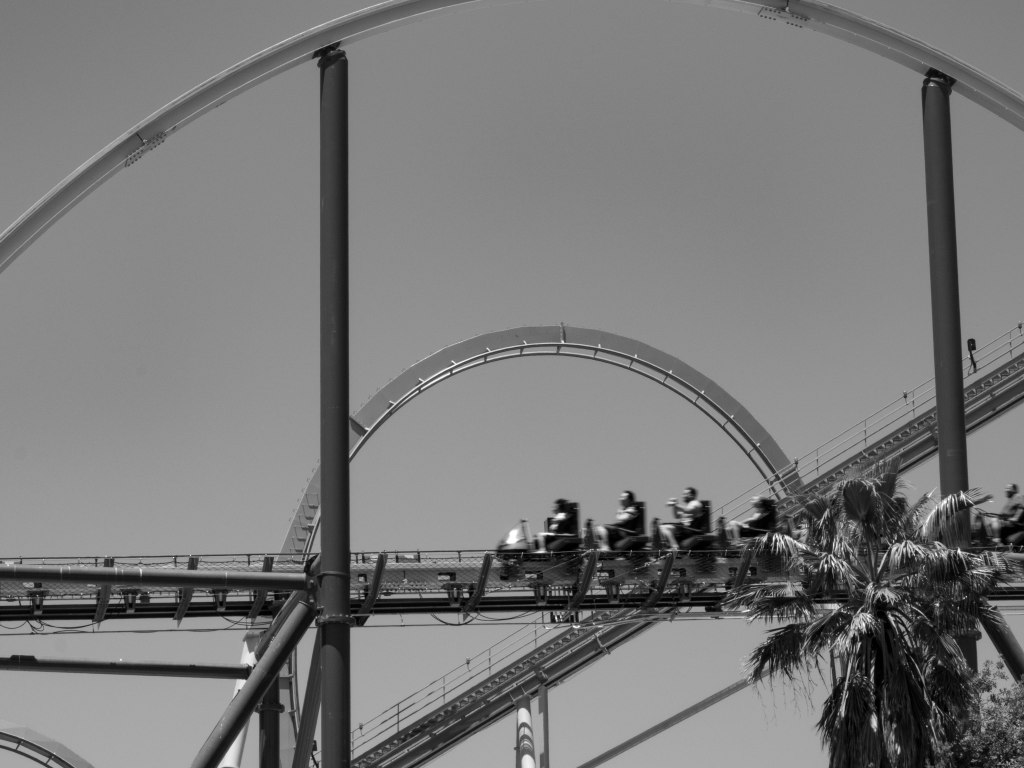
I’ve got some things I’d like to write about that don’t fit over at Zymurgia House, so I’m waking up this blog instead. The biggest topic is photography; I’m up and taking pictures again.
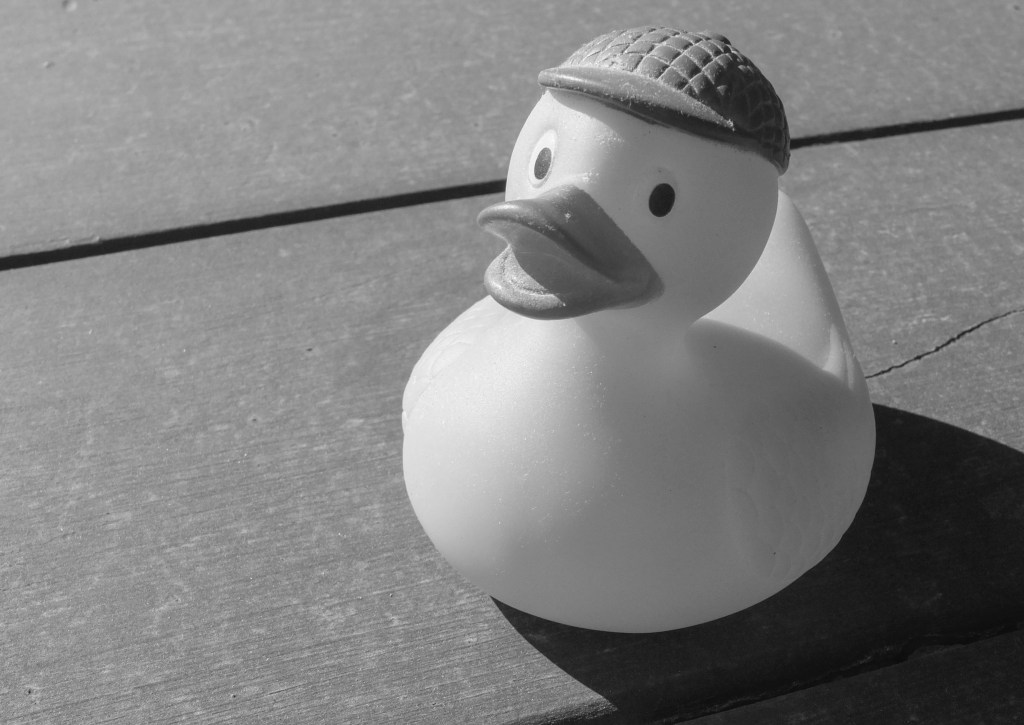
I like the idea of street photography; but I’ve mostly taken pictures of buildings, fixtures, infrastructure, and so forth. People are usually ancillary to my street photography, because, well….this post on PetaPixel has the scoop.
What do you do if there is a picture you would like to take, but the person does not want to allow it? Ask yourself these questions:
- Am I really interested in this person, or are they just a odd looking person?
- If they want a copy will I give them one?
- Would I talk to them if I did not have a camera?
If you answered no to any of those three questions, I would not take the picture.
Am I really interested in this person? No, probably not. They are simply an element in a larger scene.
If they want a copy will I give them one? No, probably not. Too much work.
Would I talk to them if I did not have a camera? Almost certainly not. Like so many bloggers, I’m much more outgoing on-line than I am in person, at least when it comes to complete strangers.
This, like my lack of taste for poetry, I regard as a personal flaw; if I’m to love my neighbor as myself, the least I can do is be interested!
My first digital camera was a Sony Mavica FD5. It had a resolution of 640×480 pixels, and saved images on 3.5″ floppy disks. (Remember those?) I could get twenty to thirty images on one disk, if I recall correctly; I had a little belt case that would hold 10 disks, and I’d swap them out like film cartridges.
Here’s one of the pictures I took with it:
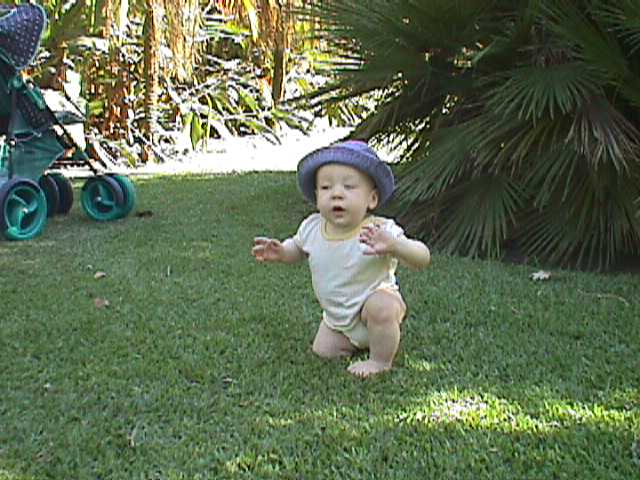
Please note: this is not resized; this is the resolution at which it came from the camera.
It was taken the day my eldest son learned to stand up. He never really pulled himself up on things; he just stood up, like you see in the pictures. (Note to baby-snatchers: don’t come looking for him, he’s in High School now.) A delightful memory, but the image quality is nothing to write home about. Or perhaps it is: “Hey, Mom, you won’t believe how bad these pictures look….”
The camera cost me lots of money, and I loved it and enjoyed it immensely.
Out of curiosity, I decided to take a look and see if anybody had an FD5 for sale at Amazon, and what the asking prices were like. I don’t want to buy one; I still have mine, though I haven’t used it in over ten years. But I thought to myself, you know, it might be a collector’s item. It was Sony’s first floppy disk camera, sold when the industry was young; it has historical interest; maybe it’s worth something.
And, it turns out, it is. If you want to get your very own Sony Mavica FD5, known to work as recently as 2009, you can order one for the rock-bottom price of $24.99. Yes, you heard me right: 24 dollars and 99 cents.
Oh, and $5.99 shipping.
Don’t delay, they are selling like hotcakes.
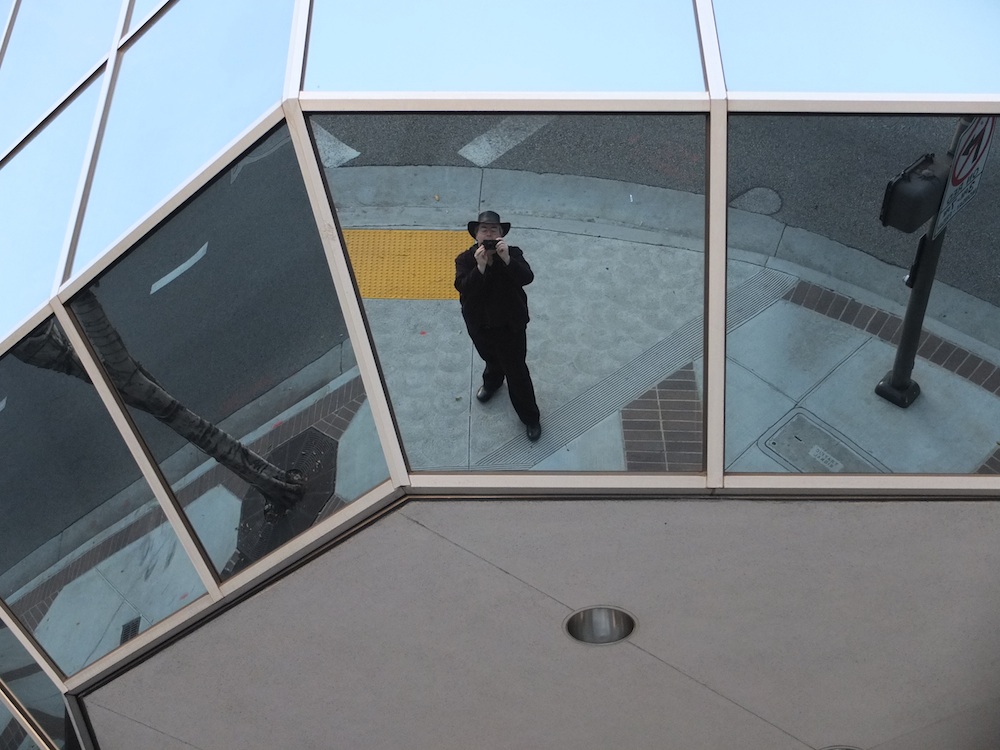
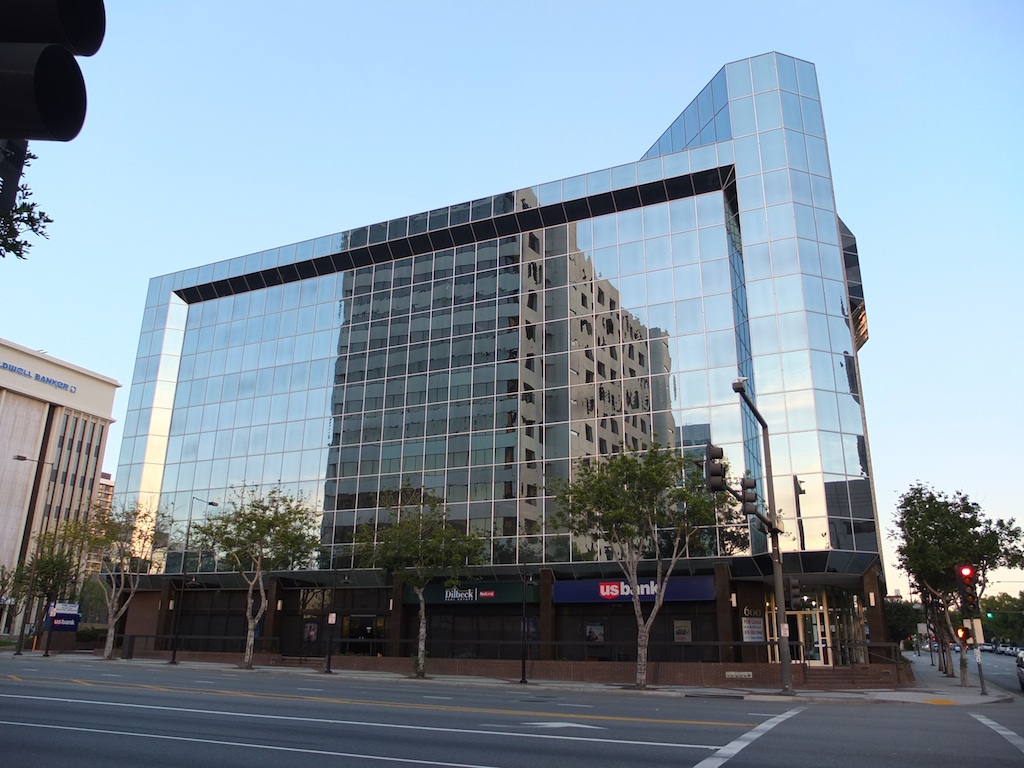
It’s not often you see a realty office with a show room.
HDR pictures are all the range in some circles; you take several bracketing exposures of a scene, under-exposed, normally exposed, and over-exposed, and combine them to produce a single image that covers a wider dynamic range (a wider scale from dark to light) than you can get in a single picture. That’s particularly an issue on bright sunny days, where one scene can range from deep shadows to bright pale whites, a range that most cameras have trouble with.
Now, one of the Fuji X10’s claims to fame is its handling of dynamic range: it’s got some kind of special sensor, and can produce a wider dynamic range in camera under the right circumstances. I was curious to give this a test. As a result I’ve got two pictures here, of the same scene, taken (unfortunately) on two different days from slightly different positions using two different focal lengths. (So sue me). But the time of day was the same (within half-an-hour). Today was nice and bright, and yesterday was even brighter. I’ve not done anything at all to these pictures, except to reduce them in size for posting on the web.
First, here’s the picture I took today, with the dynamic range set to 100%:
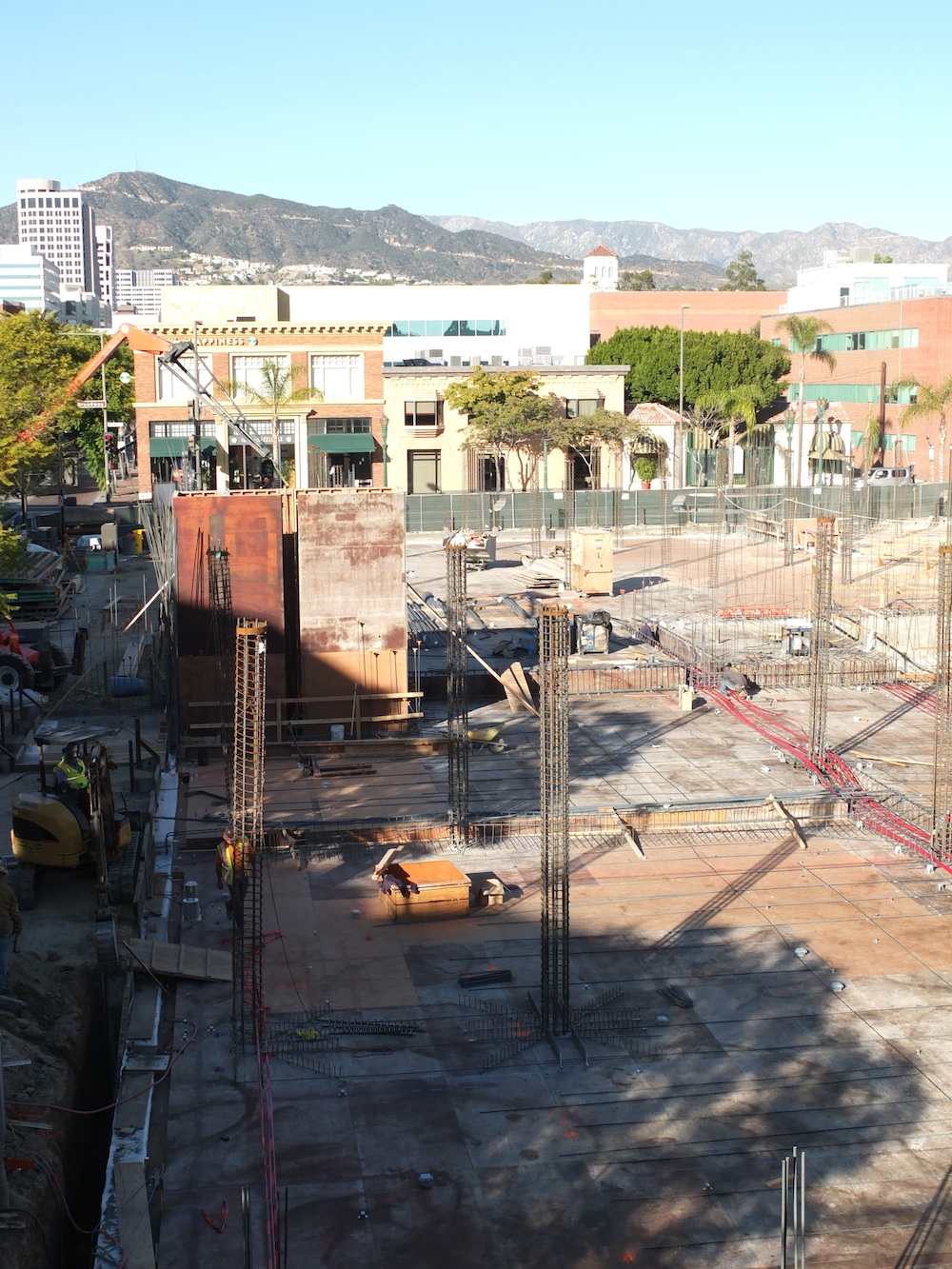
There’s lots of a shadow detail in the foreground, which is where I was focussing, but there isn’t much highlight detail in the buildings across the street. Note especially the white building in the second row, sticking up over the brick and yellow buildings, and the white superstructure on the brick building at the far right. Finally, the sunny areas of the construction site are just a little too bright.
This is exactly the kind of picture I’d expect to get with my previous cameras…unless I remembered to underexpose a bit, which case the buildings in back would look nice, but the shadows would be much darker.
Now, compare this with the picture I took yesterday, where I set the dynamic range to 400%—and remember that yesterday was even brighter and more contrasty:
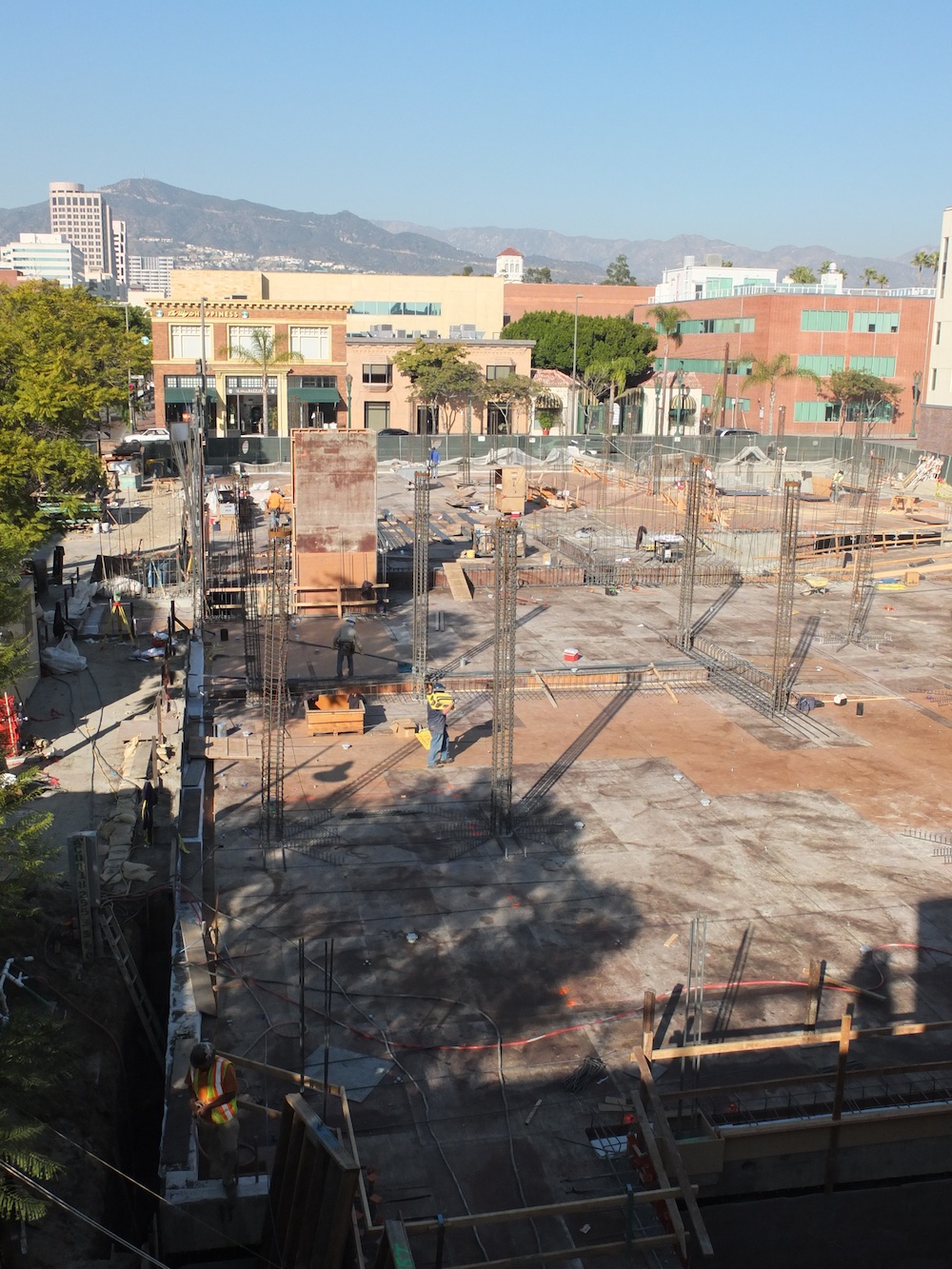
There’s much more detail in all of the buildings across the street, and especially that white building in the second row, which it turns out is actually a yellow building. The sunny parts of the construction site are also richer in color. And—we haven’t lost any shadow detail.
Serious photographers often like to go out in the early morning and late afternoon to catch the “golden hours”, because the light is warmer and easier to deal with. Me, when I get a chance to walk the streets with my camera, it’s often on days more like these. I’m glad I have a tool that will let me make the most of it.
So I got myself a new camera for Christmas this year. (Yes, I know it’s not Christmas yet. If you wait until Christmas to learn how to use the new camera, you won’t be able to take pictures with it Christmas morning. What do they teach in these schools? But I digress.)
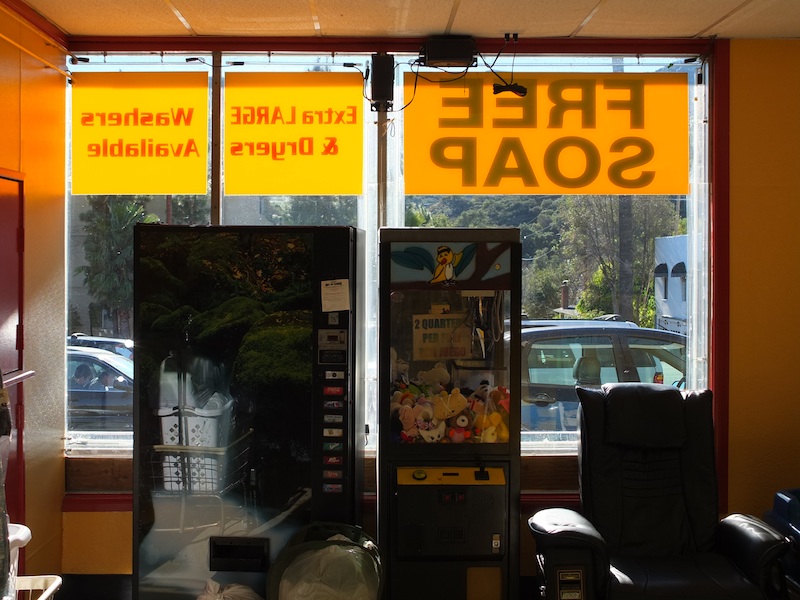
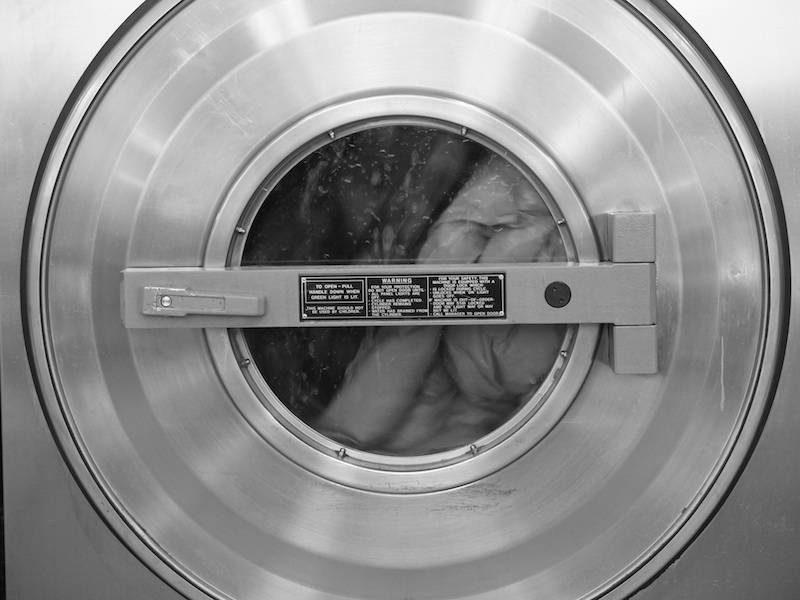
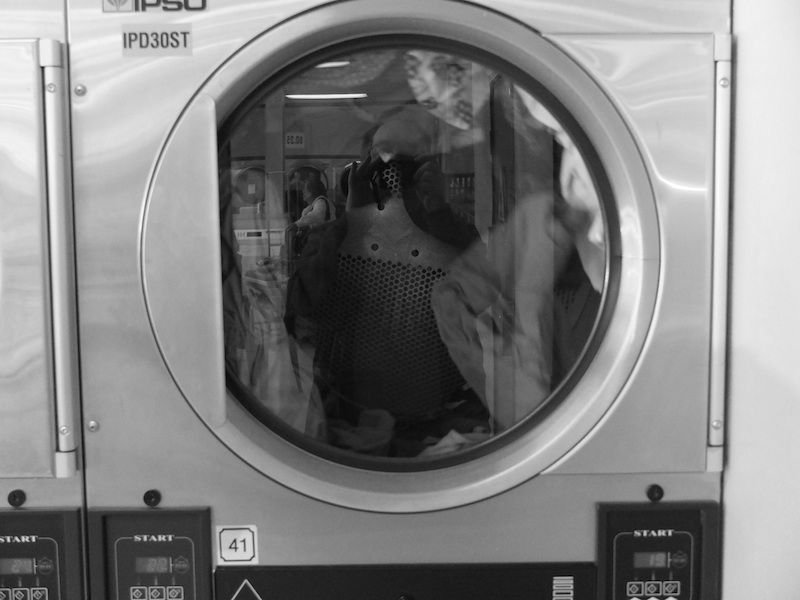
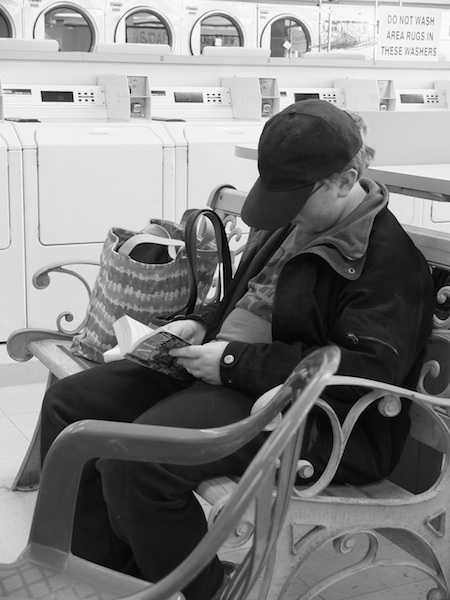
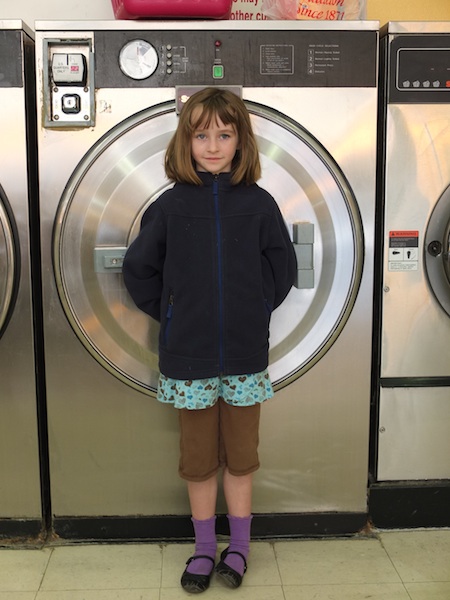
So today we went to the laundromat. You know, you can take interesting pictures anywhere.
I’m in the process of putting together a set of family yearbooks using Blurb’s software and printing services. I’ve done a couple of them, and they turned out quite well; today, I decided I’d go back to 1997, when I got my first digital camera, and redo an album I did then. Why redo it? Simply, because we’ll get better prints from Blurb than I did from my inkjet in those long lost days, and because we can make multiple copies.
Anyway, I’ve got all of the pictures; at least, I’ve got all of the pictures as they came out of the camera. But there are half-a-dozen or so pictures that I doctored to include my eldest (then eight months old) in odd places or at odd sizes.
They’re all gone.
I’m pretty good at archiving things I want to keep; I have files on my computer that go back to the very first computer I ever owned, a Kaypro 4 I bought in 1984.
Those early albums were done in PageMaker on a Windows PC. Some years ago, long after getting a Mac and discovering that PageMaker was no longer available, I guess I deleted them; and apparently I deleted the doctored images as well. I’m going to have to try scanning the pages from my old album…but considering the originals were edited 640×480 JPEGs, I’m not sanguine about the results.
Sigh.
 The View from the Foothills