Or, why they are confiscating nail clippers at
the airport:
The Chinese have a long history of building walls. The first set was
built of rammed earth by the near-legendary Emperor Qin, first emperor of
China; the last set, the Great Wall of China, was built of stone over a
thousand years later by the emperors of the Qing dynasty. In every case
the walls had the same purpose: to keep the barbarians in their place.
So prevalent has wall-building been in Chinese history that some claim
that it’s an innate tendency of the Chinese mind. In fact, nothing could
be further from the case.
Let’s start with the barbarians: the nomadic Mongol tribesman of the
northwestern steppes. We think of nomads as being rootless wanderers,
independent and fierce, needing nothing of civilization, and to some
extent that’s true. Sure they were born on horseback. Sure they
could ride all day without tiring. Sure they could use a slab of meat as
a saddle and grill it on a hot iron plate for dinner. But where did they
get that hot iron plate?
It turns out that even barbarian nomads have some use for the things of
civilization. And realistically they have just two ways of acquiring
them. They can trade for them; or they can raid for them. Despite their
reputation for fierceness, the Mongols often preferred trading to
raiding; it was less hazardous. But often they weren’t given the choice,
and therein hangs the tale.
Because of the geography of China’s northwestern frontier, the nomads
remained a permanent threat which every emperor in every dynasty had to
deal with one way or another (save possibly the Yuan–that’s when ol’
Genghis climbed onto the throne). And always his advisors were divided
into two factions: those who favored trading with the nomads, thus
creating a more stable, settled border, and those who thought that
treating with barbarians was beneath the Emperor’s dignity. These were
usually in favor of military expeditions and attempted genocide.
In some reigns, one voice predominated, and there was peace on the
border; in others the battle was carried to the nomads. And then were
the reigns in which the two factions were perfectly balanced, and in
which neither could put its policies into place. Open battle was two
expensive; trade with barbarians too demeaning. And yet the Mongol raids
continued. It was necessary that the Emperor do something. It was
necessary that the Emperor be seen doing something. And it was at times
like this, when something had to be done and nothing useful could be
done, that the Emperor ordered the building of walls.
Thousands, possibly tens of thousands, of peasants died building those
walls; and they offered little protection, for the nomads on their swift
ponies were usually quite able to ride around them. But the Emperor had
taken action, and that was the important thing.
The need for the Authorities to be seen taking action is hardly unique to the
Chinese. It happened all over this country after 9/11/2001. It’s still
happening at every airport in the land. Every time an airport screener
confiscates a pocket knife, a pair of nail clippers or (it happened!) a
baby bottle full of breast milk, it’s just another brick in that Great
Wall. It’s not good for much, and it’s not all that pretty to look
at…but at least the authorities are taking action.
Have a nice flight.
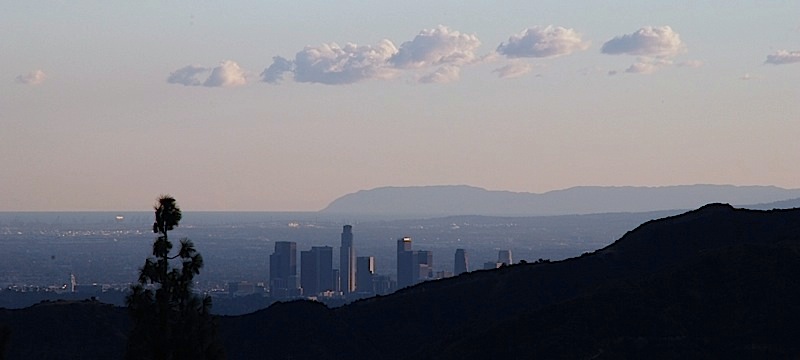
 The View from the Foothills