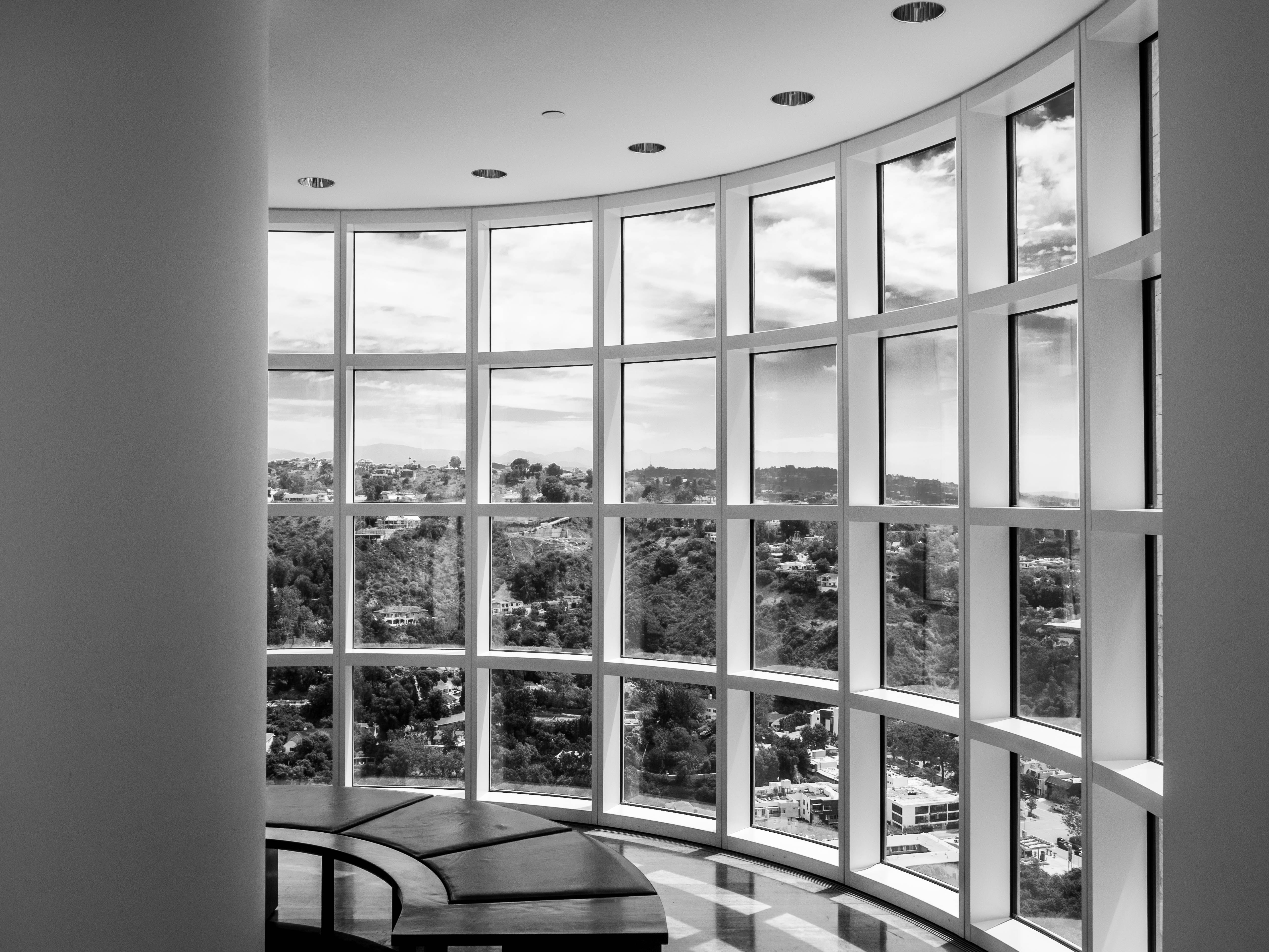
The Lookout
Image


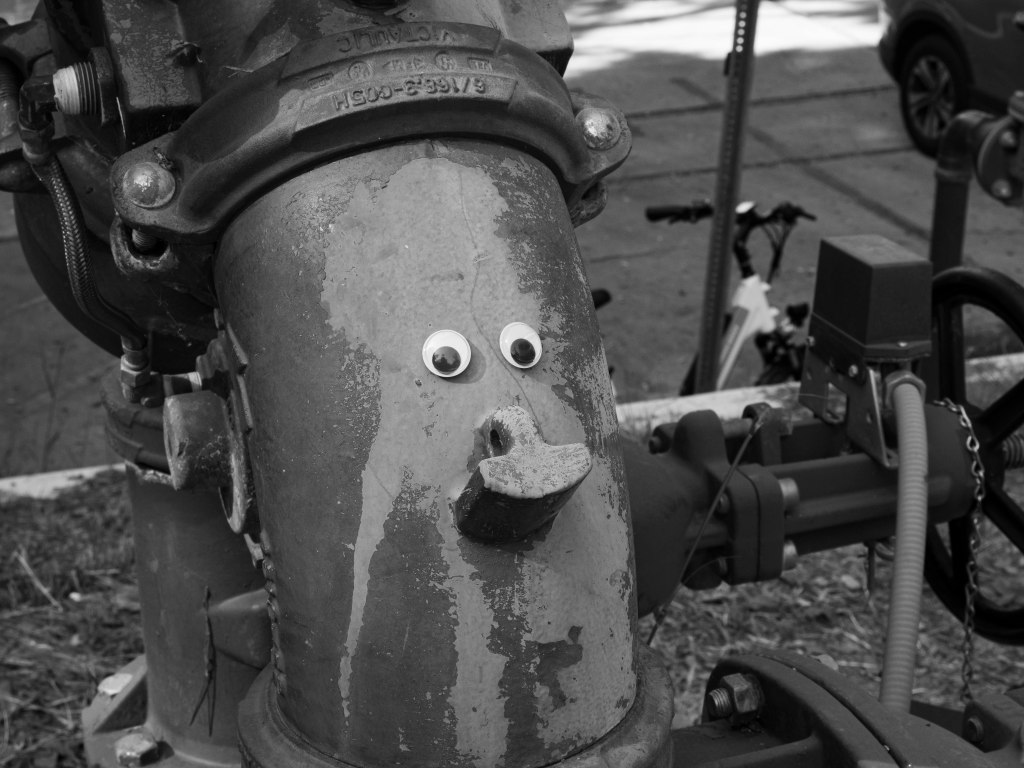
“I keep the water going, mostly. That’s what I do, water. It’s an important job, hydration, ask anybody. I help keep the lawns green, too, which is nice, since I have to look at them all day.
“Lonely? A bit, I suppose. I do have a lot of time on my hands. But I’ve learned to make good use of it.
“How? Poetry! I love a nice haiku. Would you like to hear one?
Flowing of water
Sanitation for our guests
I hold my nose high
“I’m looking for a publisher, but no bites yet.”
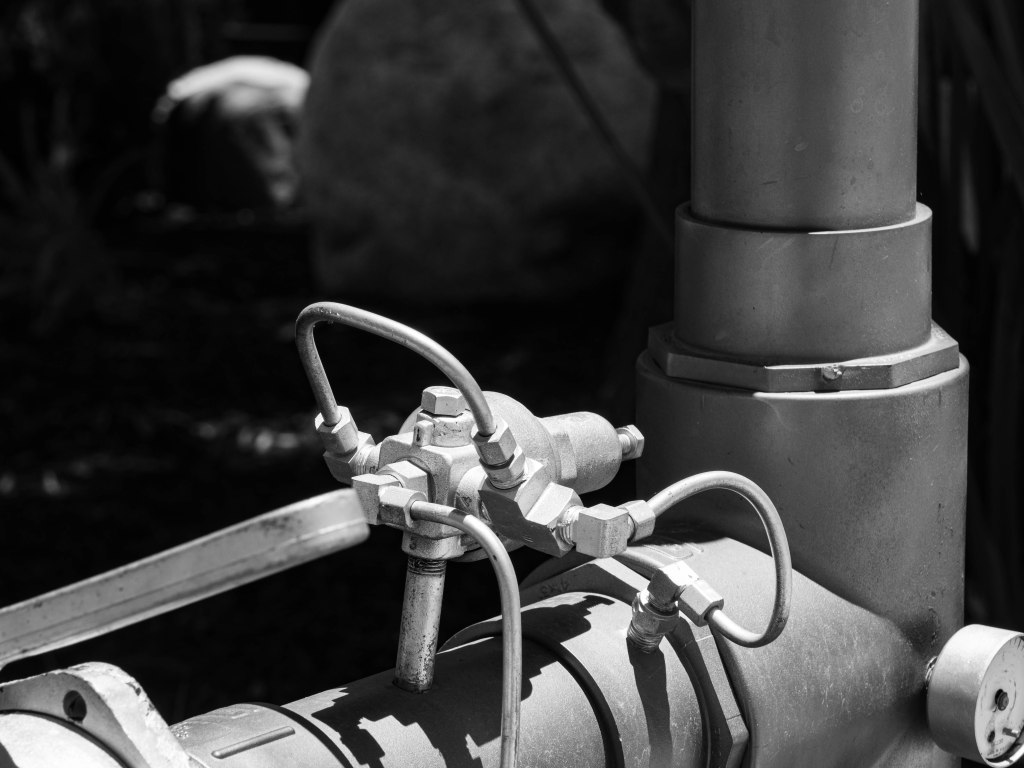
Magic Mountain’s “ScreamPunk” district features lots of goofy cogs that aren’t attached to anything and a number of sculptures made from pipes, valves, tubing, and other fittings so as to look like they do something involving steam while doing nothing at all. Still, I liked the textures of this one.
I returned to photography last April after a six-year hiatus, and I find my focus has changed. I wrote recently about Learning to See, about seeing pictures as I walk about the world. The next step, then, is learning how to finish the image so that others can see what I saw.
Here’s an example. At the entrance to the Getty Center on top of the hill there’s a terraced slope; and on that slope there’s a sculpture of a boy holding a frog by the leg. I took a few pictures; here’s what one of them looked like straight from the camera.

The thing about the sculpture is that it is shockingly white, even in the context of the Getty Center where the white of travertine marble is the defining architectural element. It’s so white it seemed to glow in the sun as people streamed by on their way up the stairs from the tram stop.
The eye and brain have an uncanny ability to focus in on the thing of interest, and ignore the rest of the scene; the camera isn’t so blessed.
Back in the day, Ansel Adams wasn’t simply skilled at shooting scenes; he was a skilled print maker. Making a classic print is more than just putting a negative in the enlarger and shining a light through it onto some photo paper. Adams had many techniques he could use to make certain parts of the image stand out and other parts recede, and he usually knew when he exposed the negative just what he would want to do in the darkroom to produce the picture he saw in his mind’s eye.
It was a lot of work; and he had to repeat those steps for every single print he made, which makes my mind boggle.
The digital photographer has the same task, except that he only has to do it once: develop the picture so that it shows what he saw.
In this case I wanted to show the glow, as it were; and I wanted to emphasize the sculpture.
First I reframed it. I try to get the framing right in camera, but the right framing isn’t always obvious in the moment (I ain’t Ansel Adams). Then I darkened the whole thing to extend the range on tones on the sculpture, and to de-emphasize the visitors in the background without quite eliminating them. That left a few bright spots that I found distracting—sun on the handrail and on one woman’s hair—so I masked and darkened those.
And here it is. Here’s what I saw, in the busyness of the visitors and the brightness of the day.
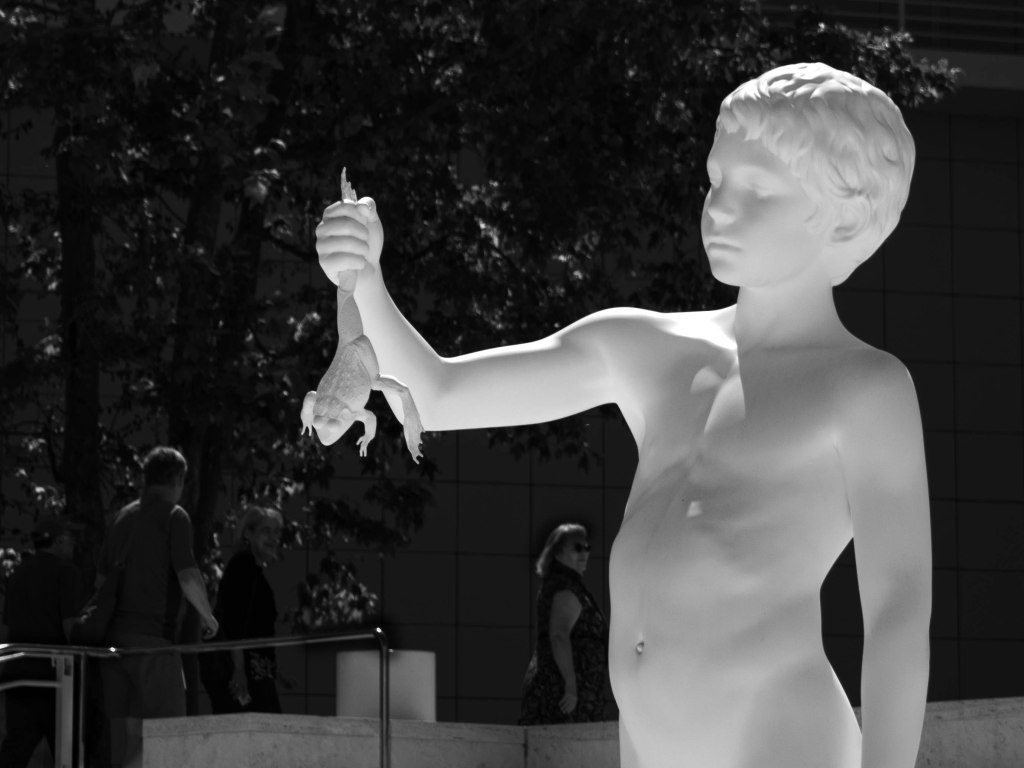
I’ll never be Ansel Adams; but I’m beginning to learn how to “print”.
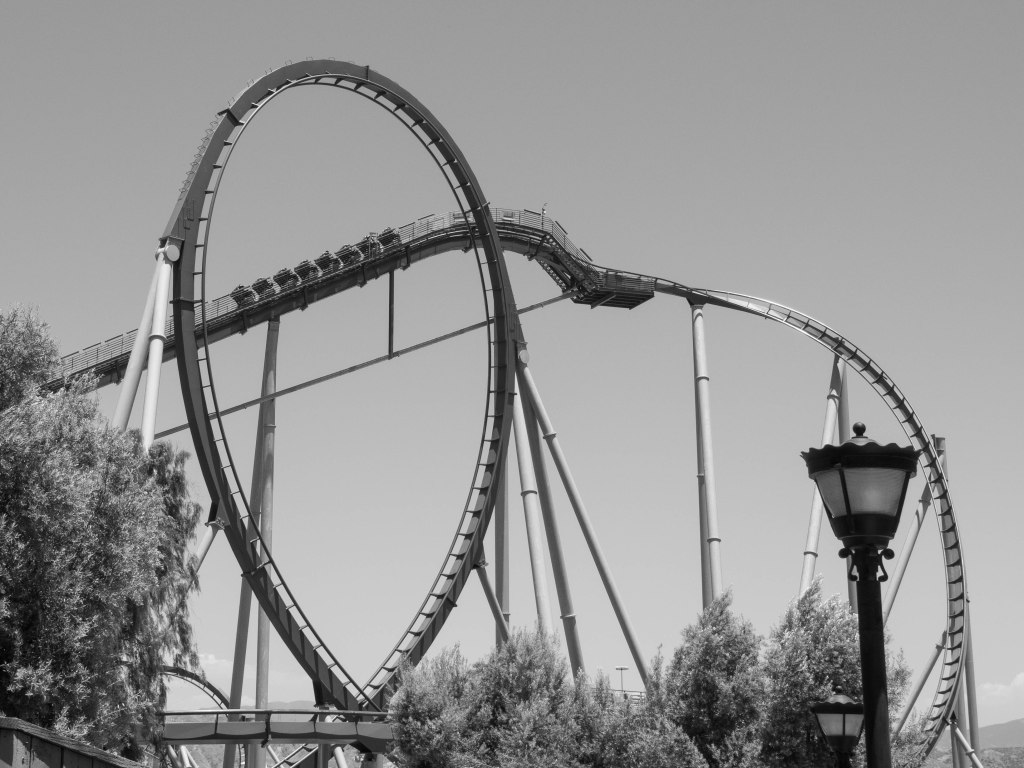
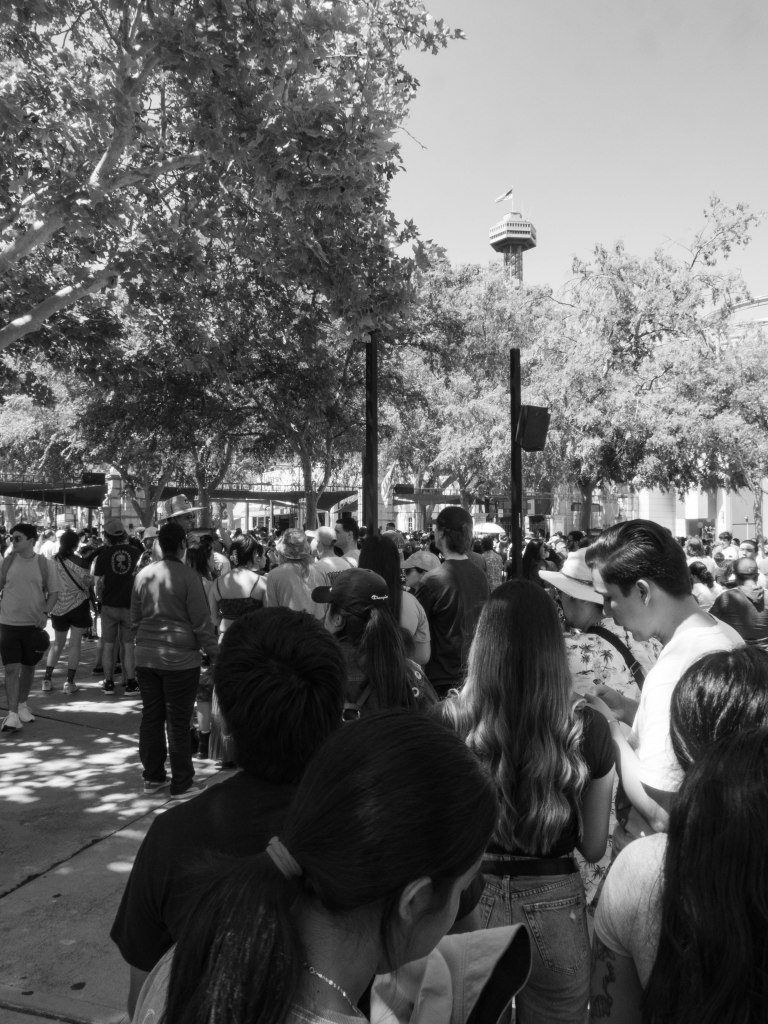
Note to self: when going to Magic Mountain with free admission mostly to take pictures, maybe arrive an hour or two after the park opens. Just saying.

“Lived here long? I should say so. Been nearly a hundred years in this exact spot. It’s a nice neighborhood, low-turnover. Good place to settle down.
“Oh, I used to be a bit of a rover, you know. I grew up on the mountain side, respectable as anything, but I got a little wild in my teens. Turned into a real alluvial fanboy, I did, always waiting for the next big storm. When the the rain came down in torrents and you could feel the earth getting heavy around you, man, those were the days! And then, whoosh, down the slope you’d go, to a new neighborhood with new neighbors. That wasn’t every storm of course, but it was a thrill when it happened.
“How often? Oh, about every thirty years or so. There’d be a fire across the mountain, and we’d all start saying our goodbyes, waiting for the next winter’s mudslides and the next big adventure.
“I gotta tell you, it started to wear on me after a while. I’m not the stone I was when I was a kid, not anymore. No, this is better.
“Changes? Well, I suppose the biggest change I’ve seen since I settled here was when the bricks moved in. Back in the early ’60’s that was. I was standoffish at first—they looked so different, don’t you know, with that red color and the weird way they wear their mortar. But I take people as they come, mostly, and I’m glad to say they’ve been solid neighbors, every one of them. They’ve stood up for me, and I’ll stand up for them. That’s the way it is.”
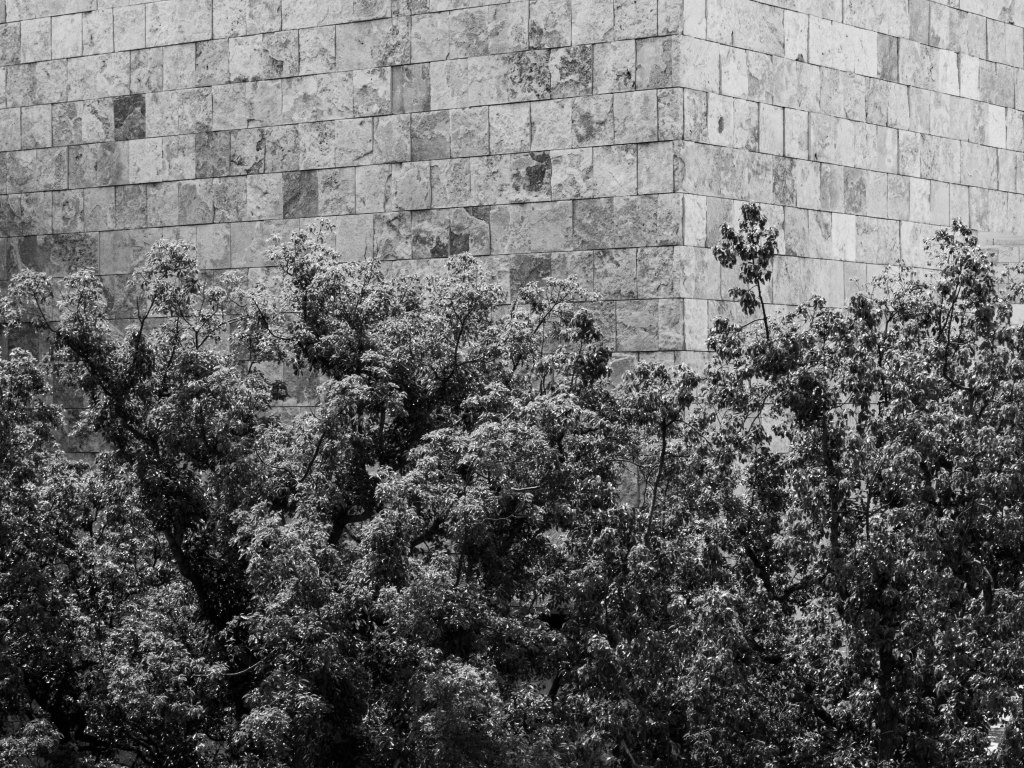
Some photographers work in the studio, using elaborate lighting setups. Some photographers work in the wilds; their decisive moment is when the sun crests that hill right there. Me, I like to go for walks and see what I see.
Normally when I go for a walk I spend it deep in thought—but with a camera in my hand everything changes. With a camera in my hand I start looking, seeing what’s there.

St. Francis, there, drew me back into photography after a six-year hiatus. I saw him standing there in the morning sun, surrounded by flowers, and wanted to keep him. I took down a camera that had been sitting on the shelf for six years—I had to charge the battery—and the next morning I got the shot.
Serendipity is the name of this game. As I walk, eyes open, I see what might be an interesting composition. It might be a new angle on something familiar. It might be a tree with an interesting arrangement of branches. It might be an object, deeply in need of a pair of googly eyes.
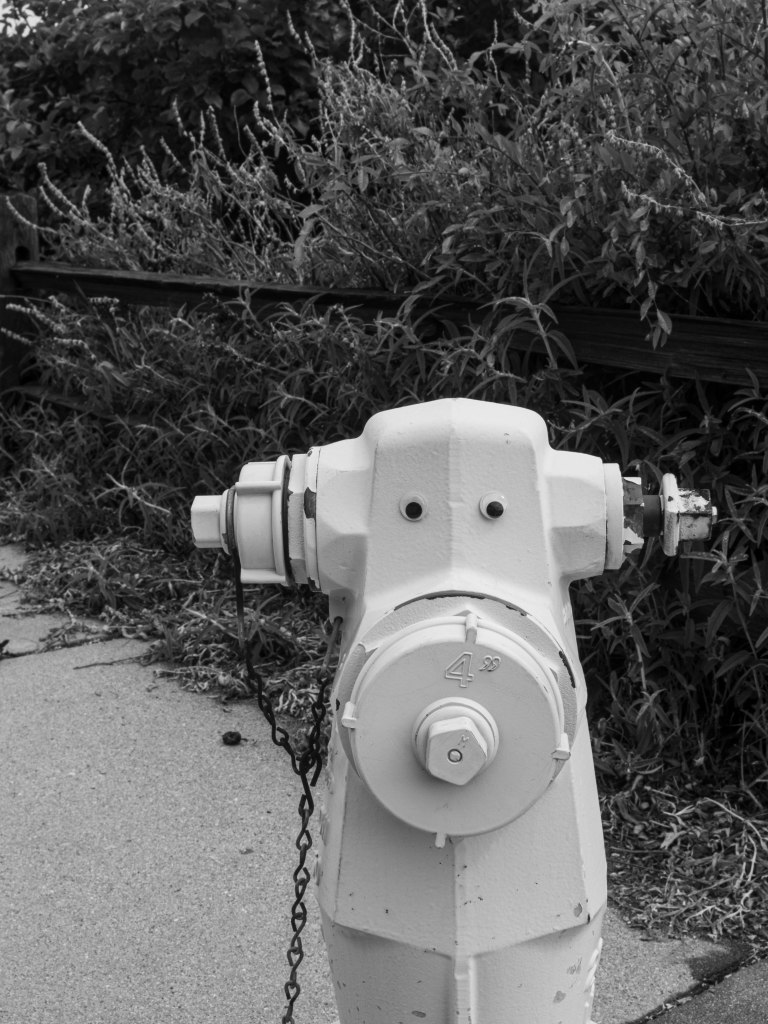
And then I’ll switch on my camera and do my best to capture this thing that I see, whatever it is. I might take a quick snap or two, or I might work the subject for a while.
Most pictures, by the nature of things, turn out not to be all that interesting when I get them home and take a look at them. Sometimes that’s all on me: I bungled the framing or the exposure or some such. Sometimes the scene just isn’t as interesting as I thought. Sometimes I just failed to capture the interesting bit.
But sometimes it all works out.
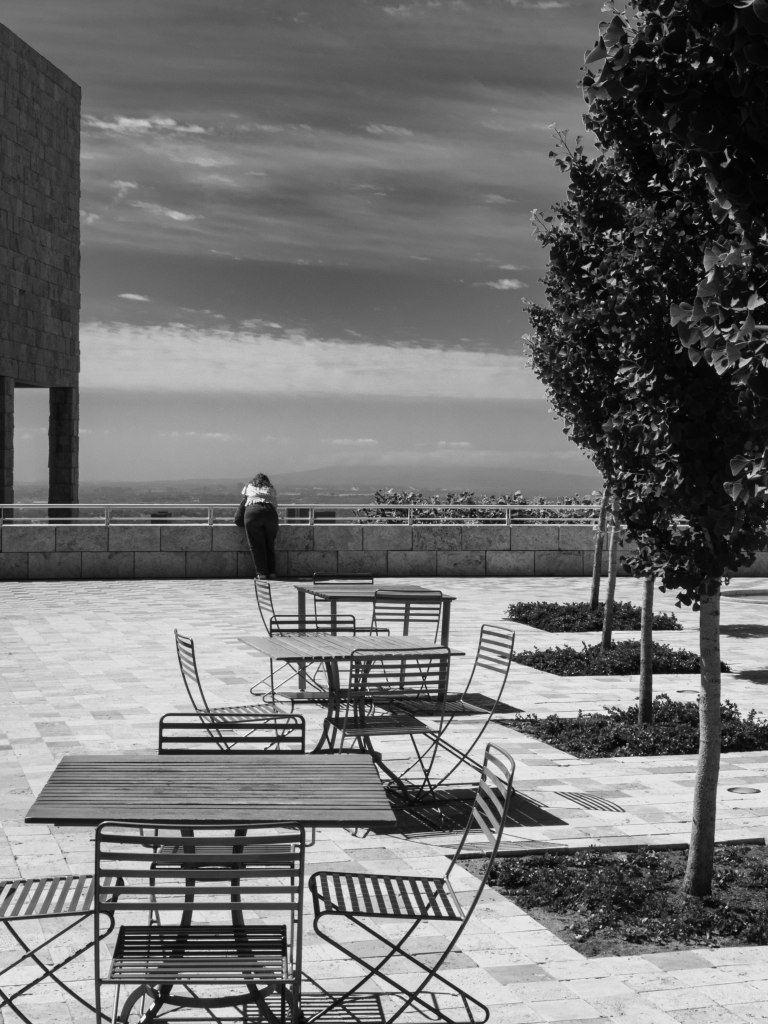
This is looking out over Los Angeles from one of the Getty Center’s terraces.
 The View from the Foothills